



Reduce waste & feed consumption with a slow feed hay bag or net today! Check out the below information to decide if a hay bag is right for you.
N.A.G BAG FAQ & Information below.
What size do I recommend?
The size depends on your hay type as well as the type of animal you are feeding.
1 inch**: Ponies and miniature animals do very well right away with the 1-inch netting.
1.5 inch: This is our most common size for most grazing animals.
2-inch: For larger breeds like drafts, warm bloods, working horses, young and older horses, and some mini cattle.
2.75 inch: This size must be placed in a feeder as a safety precaution. It is great for cattle and large breed horses. Ear tags, halters and any hoof must not be in contact with nets.
**Note – 1” netting is designed for small animals and for animals that have mastered grazing from the 1.5” net hole sizes. During cold weather a net can freeze, further restricting an animal’s ability to feed from this hole size. We recommend larger hole sizes be used in freezing temperatures.
How to Introduce a NAG Bag: Always provide loose hay alongside the NAG Bag until the animal seems comfortable eating from the net. This will ensure that animal learns to graze from the net without frustration. Proper introduction of a grazing bag will prolong the life of the net.
Net Capacity
Mini Bag 1 to 2 Flakes
Trailer Bag 2 Flakes
Hanging Bag 3 to 4 flakes
Mid Day Bag 5 to 7 flakes
Day Bag 6 to 8 flakes
Square Bale Bag 1 two-string bale up to 95 lbs
EZ-Fill 3 to 4 flakes
3 Tie Bale Bag 1 Three-string bale
Large Rounds and Squares
When customers are purchasing round bale bags, ask them what their bale size is (height and width) and recommend the appropriate size bag. For example. if a client has a 5x5 bale size recommend that they buy a 5x5 (RB5) or a 6x6 for ease in winter climates as nets become stiff and frozen, so using a size up helps with ease of feeding. The same is true for large square bales. Nets should fit loose never tight – if so exchange before using..
Note: We do not recommend the use of 1” netting in below-freezing temperatures. This is because nets can freeze and increase restriction, hampering an animal’s ability to access forage. When it comes to round and large square bale nets, the 1” netting is best suited for use in warmer climates.
FAQs
Can bags be left loose on the ground?
Yes. All of our bags can be left loose on the ground for extra movement and entertainment. Non-sandy surfaces are best. But with large bale bags these nets can sustain damage, as horses will stand on them and pull up, as well as freezing to the ground more likely. Placing in a feeder is best for all the large bags.
IMPORTANT: Horses with shoes must have nets placed in boxes or feeders. Also note that bags with 2” net hole sizes can not be left out for minis or young horses. The 2.75 is never to be used on the ground.
Can I soak hay in the bags?
Yes, bags can be used to soak hay. We suggest that customers soak hay for a maximum of a 30 minutes. To avoid a hazard, customers should let the water drip/drain out before hanging bags above a surface that could become slippery (such as in a trailer).
Note that soaking hay in warm water results in the removal of higher amounts of sugars and starches. Levels decline significantly when hay is soaked in warm water for 30 minutes or cold water for 60 minutes. It is important that hay is not over-soaked (1-hour max) as this can cause mineral loss and reduces the amount digestible fiber. Soaked hay should be consumed within 6 hours and any remaining hay should be removed from the bag.
What type of hay do I use?
Grass mix hay free from both dust and mold is ideal. Easy keepers do best on 1st cut, lower sugar and starch hays. Hard keepers and elderly horses may require higher protein hay types.
Coarse, long hay is harder for horses to remove from a hay net than fine hay is. If hay is too fine, it can cause issues like balling and/or impactions. Hay with more stem aids digestion by helping hindgut secretions flow, increasing the amount of chewing required, and slowing down the rate of consumption - all good things.
When the net is empty should I refill it, even if my animal has eaten all of its hay for the day?
Yes, it is best to keep the nets full. You may go through a bit more hay in the beginning, but after the horse self-regulates his feeding (grazing), his habits will change both physically and emotionally as consumption slows down. The hay type must suit your horse's needs according to whether they are easy or hard keepers, we strongly recommend hay testing. You could also utilize a two-bag system…one bag with the regular hay and one bag with lesser protein & WSC hay (a munching hay or straw).or one bag with a smaller hole net and one larger hole net.
Will my horse be frustrated with the NAG Bag?
After proper introduction, horses using NAG Bags with the correct hole size tend to prefer to graze from the net, rather than from loose hay feedings.
Can I use this continuous feeding system with my laminitis-prone horse?
Yes, this is one of the best feeding systems to use because it helps to keep your horse’s insulin levels balanced. When forage is available 24/7 stress is also reduced. BUT it is important to note that you must ensure that you are feeding hay that is correct for sensitive horses – having your hay tested is essential! Hay testing is easy to do with minimum cost, see our web for more info.
How is the Round Bale eaten down?
The round bale simply shrinks/collapses down with the hay and molds into the shape of a large pillow. Before the bag is completely empty, shake the hay out and insert a fresh round bale.
Will the Round/Square Bale freeze to the ground?
In the winter you can use straw, shavings, or tarps under the hay net. Making sure that the nets never become completely empty is the key, as hay helps to insulate the nets from the ground.
Do I have to re-tighten the Round/Square bale bag?
No, you only tie the net up once, but you should inspect your bale bag frequently. As if a hole appears its easy to fix – if left over days it will become larger and a danger.
My horse won't leave the slow feeder...
Keep going along with it, their eating will slow down. For some animals, it can take days and sometimes even weeks! These horses are usually the ones whom have never had a free choice feeding before.
Using NAG Bags with poor teeth or missing teeth?
Before a customer starts feeding with slow feeders they should check their animal’s teeth alignment.
Some miniatures have poor teeth alignment, and it is not uncommon for older horses to be missing teeth. If their horse has a missing tooth that is fine, but if it has all of its middle teeth and none on the sides, or if one tooth is laying over top of another, we recommend that they seek the advice of a veterinarian or dental assistant before use.
Can my horse chew through the NAG Bag?
Our net is the safest and most durable on the market. When introduced correctly (with loose hay feedings along with the NAG Bag), we see minimum to no damage, but it is possible. If this happens, a simple repair can be made (the value of the NAG Bag far exceeds a small repair or two). Care should be taken not to snag bags on feeders or equipment.
What do I do if I get a hole in the net?
All nets come with spare matching twine - just as a good sweater comes with an extra button. Make sure you sew up the hole as soon as it is found so that the animals don’t make it larger. If you have a hole that has been left and is now very large and cannot be pulled together without making the bag too small, you will need a repair patch kit. Repair kits include large patches of netting and a roll of twine. See our video on repairing.

Feeding Birds in the Fall
November – a month typified by shorter daylight and dropping temperatures - is a great time to get started on a backyard bird feeing program. Not only will bird feeding stations help our avian neighbors survive the long cold winter ahead, but having wild birds within view is guaranteed to make a Saskatchewan winter more interesting and inspiring.
For those who are new to bird watching and bird feeding, it is important to note that it is the availability of food, not temperature, that determines which bird species can thrive in our challenging winters and which must seek warmer climes. Those that depend on flowers and active insects must leave while those species that are adapted to survive on a paltry diet of seeds, frozen insects, buds and berries, carrion and/or live prey remain behind.
Supplemental food will be readily accessed by many bird species, and fall is an excellent time to start setting up feeding stations because the birds will soon learn where steady supplies are located. Some, like chickadees, might even establish their winter territories to include feeders.
High quality seed is the foundation of a successful backyard bird feeding program. To this end, avoid the widely available cheap seed mixtures that are laden with such non-palatable offerings such as milo (grain sorghum) and whole cereal grains (e.g., wheat, oats). Mother Nature’s seeds are clean, of high quality, and are sold either as single seeds (e.g., sunflower seeds shelled and unshelled, peanuts shelled and unshelled,) or blended using a variety of nutritious and field-tested ingredients.
Myrna Pearman is the Resident Naturalist for Mother Nature’s seed and is the co-author, with Trevor Herriot, of Backyard Bird Feeding: A Saskatchewan Guide. It is available at Early’s or can be ordered from Nature Saskatchewan. All proceeds from the sale of this book support Nature Saskatchewan’s conservation and education programs.
Check out Mother Nature's Bird Seed today:

While most birds head south at this time of the year a few of our feathered friends will stick it out for winter. Having the right food around can insure that you will have those birds hanging around your yard. As the temperature drops, birds will require food with higher energy content like sunflower or safflower seeds, mixed nuts or suet. You should also consider going with a shelled product as it will reduce the amount of waste underneath the feeder and cut down on the amount of undesirable animals attracted to your yard. Choosing the right feeder is also key to attracting the right birds, smaller port feeders or a mesh nut feeder will attract smaller birds like Chickadees, Nuthatches or Pine Siskans while discouraging larger birds like magpies. Check out our FF10 mesh feeder, 391pine tube feeder or 24211 have a Ball feeder for shelled sunflower seeds and our B00303 Fly Through and 395YH peanut mesh feeder for those mixed nuts. We also have a few hopper feeders that will accommodate both suet and seed like 50153 Lodge feeder 50144YH Deluxe Cedar Chalet or 50181YH Star Barn feeder.
Written by Early's Expert Cory Confrey October 2021

Setting up a bird feeder is easy, fun and very rewarding. Check out our video below:
Beet Pulp can be an amazing feed option for your equine companion, but it is important to know how to properly use. All horses can appreciate beet pulp alone, or in addition to other feeds for supplementation. A soaked ration can be favorable for senior horses who need help maintaining weight, horses who have dental concerns and/or struggle to properly chew their food. In addition mixing supplements and medications with beet pulp can be much easier, as horses may have a more difficult time "picking" around unwanted ingredients.
Important considerations before feeding beet pulp
Check out our video of Tornado the wonder pony waiting for supper!
A proper fitted helmet is a horse riders best friend! Finding the right fit can be a bit difficult however. Our experts are here to help! Come visit us at one of our two locations for a free helmet fitting. Your safety while riding is our priority, and we can help you find the right helmet today. Here are a few easy steps to make sure you find the right helmet today:

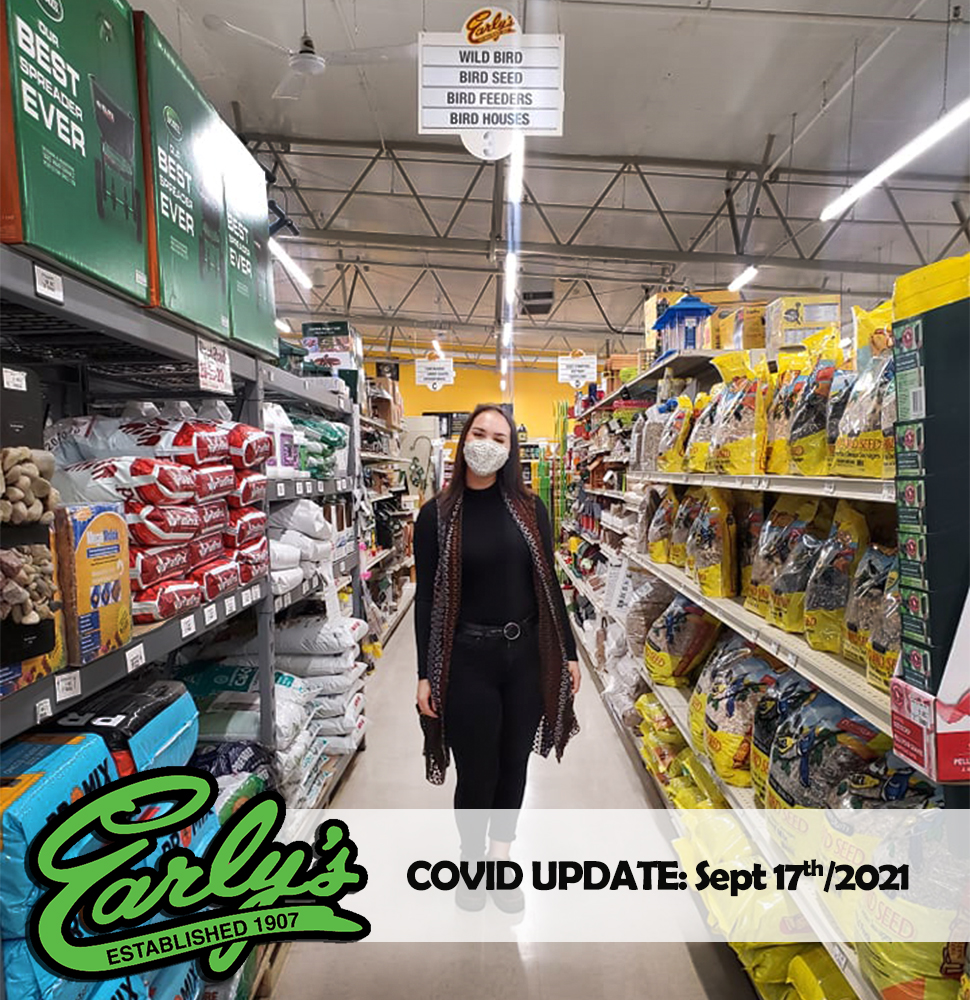
Covid-19 Update: Effective Friday, Sept 17th all customers and staff will be required to wear non-medical masks in indoor public spaces to reduce the risk of COVID-19 transmission. Thank you for your understanding.

In just a few easy steps you can fix yellow (pee) dog spots on your lawn. All you need is a few things: grass seed, treatment like dolomitic lime or After Dog, soil, rake, garden hose, patience and time! Check out how our expert Audra fixes dog spots on her lawn. Questions? Ask an Early's Expert today.
Come to Lorne Ave this Saturday (August 21st) from 11-3 and support WANAR Rescue BBQ and help Break the Tundra with donated pet food from Horizon.

Your pet may love car rides, and you may love an adorable driving companion, but this summer make sure that pet's are not left unattended in hot vehicles!
There is no safe amount of time to leave your pet in the car on a warm day. Animals are much more prone to heat stroke than humans, and the temperature inside a vehicle can rise between 8-10 degrees in just 10 minutes on a 30-degree day! Make sure to plan your route so that pets are never left unattended, or plan visits at pet friendly locations like Early's. Check out this video produced by Saskatoon Media Group and the Saskatoon SPCA.